
Choosing the Right Invoice Payment Terms
Payment terms directly determine when cash enters your business. Choose terms that are too generous and you fund your clients at your own expense. Choose terms that are too tight and you lose business. This guide explains the main payment term options and how to choose the right ones.
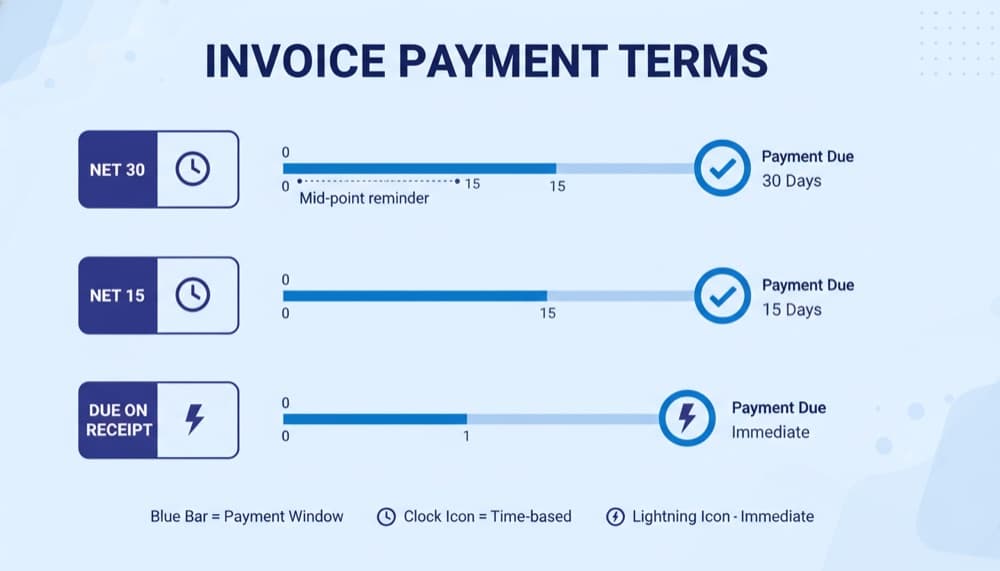
Common Payment Term Formats Explained
Payment terms have their own shorthand language that can confuse new business owners.
Net 30, Net 15, Net 7
"Net X" means the full amount is due within X days of the invoice date. Net 30 is the most common standard in B2B transactions. Net 15 and Net 7 are more aggressive - appropriate for smaller amounts, clients with strong payment history, or industries where faster payment is the norm.
2/10 Net 30 (early payment discounts)
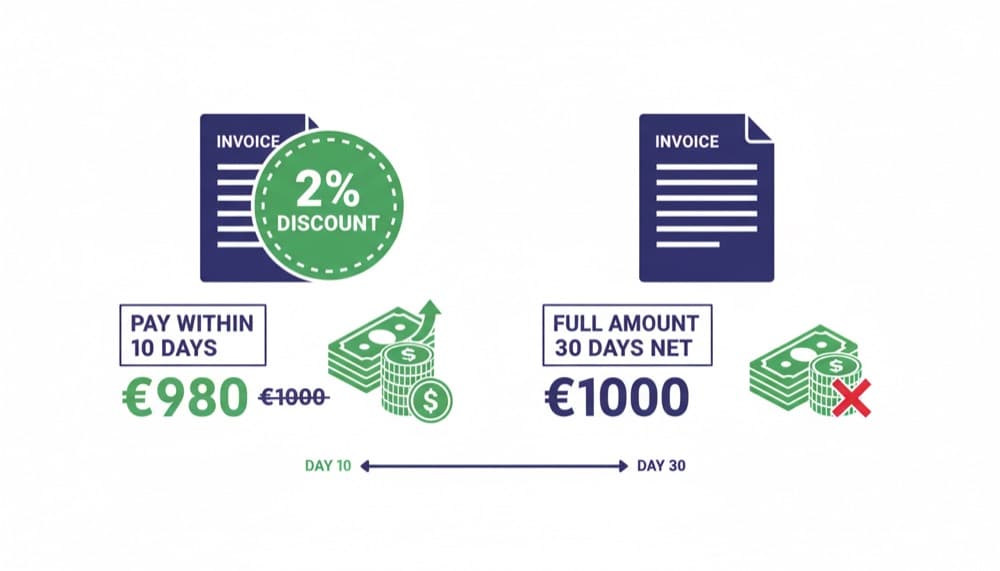
"2/10 Net 30" means the full invoice is due in 30 days, but a 2% discount applies if the client pays within 10 days. This incentivizes fast payment. The 2% cost to you is often worth it: getting paid 20 days earlier on $10,000 improves your cash flow significantly.
Deposits and milestone payments
For larger projects, a 25–50% deposit before work begins covers initial costs and pre-qualifies the client. Balance payments can be due on delivery or tied to milestones.
Payment terms comparison: $10,000 project
Net 60:               Wait 60 days for $10,000
Net 30:               Wait 30 days for $10,000
2/10 Net 30:          $9,800 in 10 days OR $10,000 in 30 days
50% deposit + balance: $5,000 now + $5,000 on completion
Due on receipt:       $10,000 immediately (with payment link)
How to Choose the Right Terms
There is no single right answer - the best terms depend on your industry, client size, project value, and your own cash flow needs.
New vs established clients
For new clients, use shorter terms and require a deposit. You have no payment history to rely on. For long-standing clients with a track record of paying on time, you can offer longer terms as a relationship benefit.
Large enterprise clients
Large companies often have standardized Net 30, 45, or 60 terms as policy. You may not be able to negotiate these - but you can charge a premium that reflects the longer wait.
Key Takeaway
Net 30 is a starting point, not a rule. Many businesses operate successfully on Net 14 or Net 7. The key is to be explicit in your contracts and invoices.
What to Do When Clients Pay Late
Late payment is a reality of business. Manage it through policy: include late payment terms in every contract and invoice. In the UK, the Late Payment of Commercial Debts Act automatically entitles you to 8% over base rate on overdue B2B invoices.
The escalation sequence
Day 1 overdue: Friendly reminder email. Day 7: Follow-up with late payment policy reminder. Day 14: Phone call. Day 30: Formal letter before action, 7-day deadline. Day 37: Small claims court or debt collection agency. Most invoices are paid by day 14.
Put this into practice with Note.now
Everything covered in this guide is built into Note.now. Try it free for 7 days.
Get started free