
Understanding Cash Flow for Small Businesses
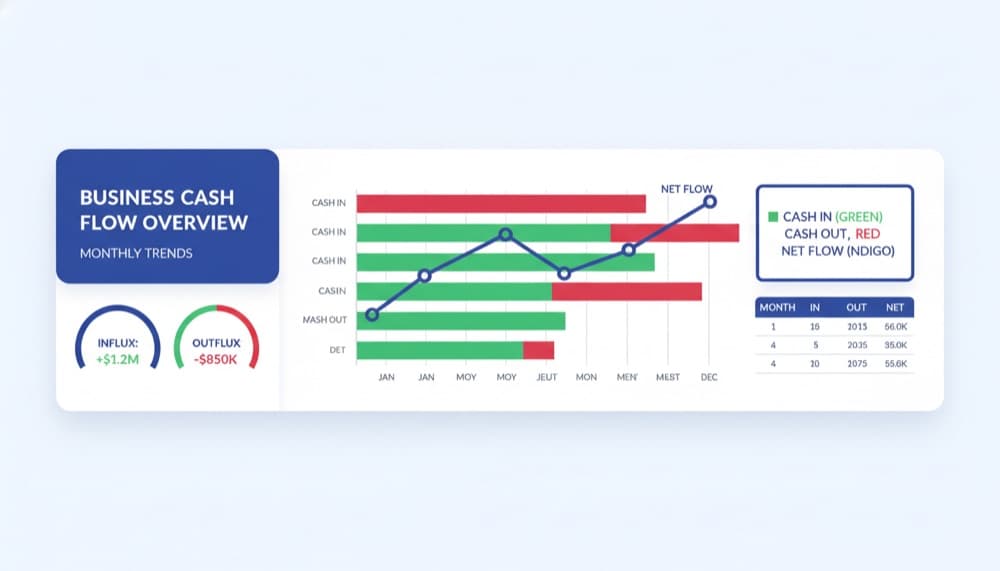
A company can be profitable on paper and still run out of money. It happens every day. The culprit is almost always cash flow - the timing of when money actually moves into and out of your bank account. Understanding cash flow is not optional; it is survival knowledge for every business owner.
Profit and Cash Flow Are Not the Same Thing
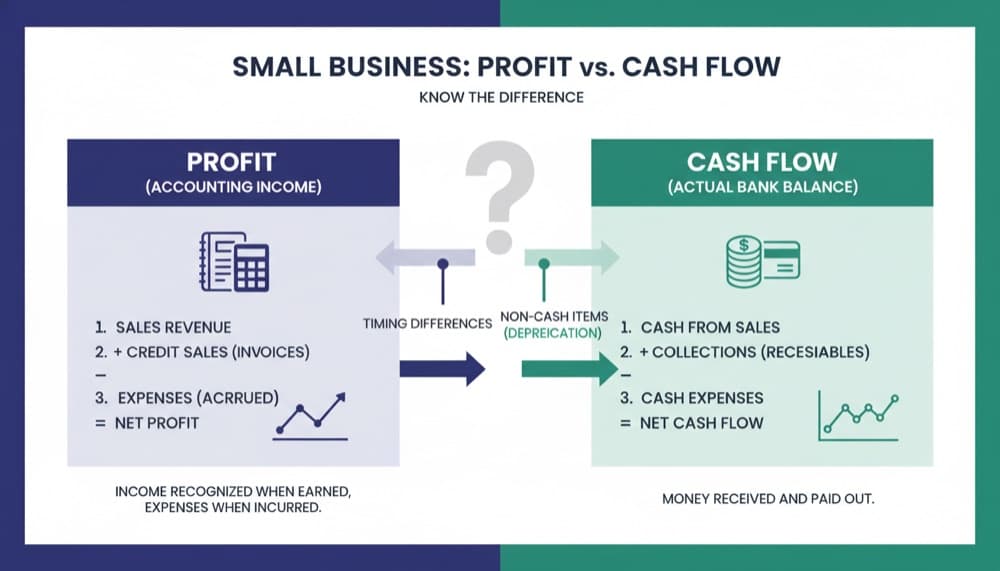
Profit is what is left over after you subtract your costs from your revenue - on paper. Cash flow is the actual movement of money into and out of your bank account. The gap between the two is where businesses get into trouble. You can have $50,000 in outstanding invoices and zero dollars in your bank account. You are "profitable" but you cannot make payroll.
Why the gap exists
The gap exists because of timing. You do the work in January, invoice in January, but your client pays in March. Your rent and salaries are still due in January and February. If you do not have the cash to cover costs while waiting for payment, you have a cash flow problem - regardless of how profitable your business looks.
The profitable business that almost ran out of cash
A marketing agency invoiced $120,000 in Q1 with Net 60 payment terms.
Staff costs: $45,000/month, due immediately.

Q1 Revenue on paper: $120,000
Actual cash received in Q1: $40,000 (prior quarter invoices)
Total costs paid in Q1: $135,000

Cash deficit: -$95,000 - despite being "profitable".
Key Takeaway
Profit tells you if your business model works. Cash flow tells you if your business will survive. You need to manage both.
The Three Types of Cash Flow
Your cash flow statement divides cash movements into three categories, each telling a different story about your business.
Operating cash flow
Cash your core business activities generate: revenue collected minus cash paid to suppliers, employees, and for operating expenses. Positive operating cash flow means your business model is genuinely working. Negative means you are burning through cash to run the business - a serious warning sign.
Investing cash flow
Cash spent on or received from investments in assets - equipment, vehicles, property. Negative investing cash flow is often a good sign: it means you are investing in growth.
Financing cash flow
Cash received from or repaid to investors and lenders. Taking out a loan is positive; repaying debt is negative. This shows how your business is funded.
How to Forecast Your Cash Flow
A 13-week rolling cash flow forecast is one of the most powerful tools in a business owner's arsenal. For the next 13 weeks, estimate every cash inflow (invoices you expect to collect) and every cash outflow (payroll, rent, supplier payments, tax). The result tells you when you might have a shortfall - with enough warning to act.
Simple 4-week forecast
Week 1: Opening $12,000 | In $8,500  | Out $15,200 | Close $5,300
Week 2: Opening $5,300  | In $22,000 | Out $9,800  | Close $17,500
Week 3: Opening $17,500 | In $3,200  | Out $18,400 | Close $2,300  WARNING
Week 4: Opening $2,300  | In $14,000 | Out $9,500  | Close $6,800

Week 3 is a risk - plan ahead to bridge that low.
Key Takeaway
Forecast cash flow weekly, not monthly. Monthly forecasts miss the intra-month timing that causes real problems.
Practical Ways to Improve Your Cash Flow
Cash flow improvement is mostly about closing the gap between when you do the work and when you get paid - and widening the gap between when you pay your own bills.
Getting paid faster
Invoice immediately after completing work. Offer online payment options - businesses with card payment links get paid 2–3x faster. Shorten payment terms from Net 30 to Net 14 or Net 7. Offer an early payment discount. Set up automated reminders. Chase overdue invoices on day 1, not day 30.
Paying strategically
Negotiate longer payment terms with suppliers. Pay bills on their due date, not before. Use a business credit card for operating expenses and pay the balance monthly - this effectively gives you 30 extra days on every purchase.
Warning Signs Your Cash Flow Is in Trouble
Catching a cash flow problem early is far easier than fixing a crisis. Watch for: your bank balance declining month over month despite growing revenue; regularly paying bills late; using your overdraft as normal operating cash; not being able to make payroll without a credit draw; delaying invoicing. Any one of these warrants an immediate review of your cash position.
Put this into practice with Note.now
Everything covered in this guide is built into Note.now. Try it free for 7 days.
Get started free