
How to Read a Profit & Loss Statement
Your Profit & Loss statement (P&L) is the scorecard for your business. It tells you whether you are making money, how much, and where. But many business owners look at their P&L and see a wall of numbers. This guide breaks down every line, explains what to watch for, and shows you how to use it to make better decisions.
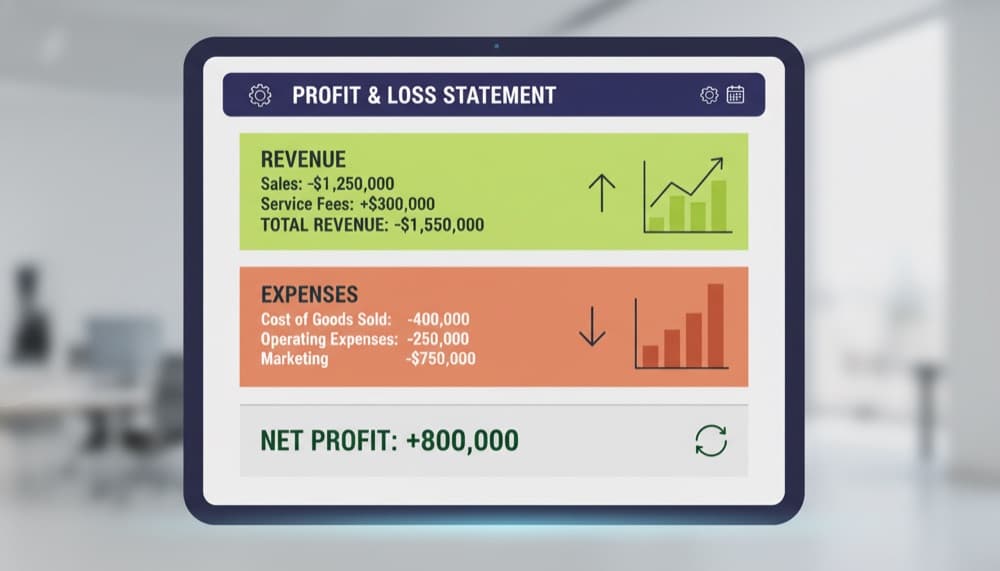
The Structure of a P&L Statement
A P&L follows a consistent structure: Revenue at the top, then costs subtracted in layers to arrive at Net Profit at the bottom. Each layer tells a different story about your business performance.
Revenue - the top line
Total sales before any costs are subtracted. Revenue is recognized when earned (when you deliver), not when cash is received. A business with $500,000 in revenue may only have $350,000 in the bank if clients owe the rest.
Cost of Goods Sold (COGS)
Direct costs of producing your product or delivering your service. For product businesses: raw materials and direct labor. For service businesses: direct staff hours and subcontractor costs. Gross Profit = Revenue minus COGS.
Gross Profit and Gross Margin
Gross Margin % = (Gross Profit / Revenue) × 100. A 60% gross margin means for every $100 of revenue, $60 remains after direct costs. Benchmarks vary: SaaS 70–80%+, retail 30–50%, professional services 50–70%.
P&L walkthrough
Revenue:               $420,000  (100%)
Cost of Goods Sold:   ($168,000)  (40%)
─────────────────────────────────
Gross Profit:          $252,000   (60%)

Payroll:               ($95,000)
Rent:                  ($24,000)
Marketing:             ($32,000)
Software:               ($8,400)
Other:                 ($12,600)
─────────────────────────────────
Operating Profit:       $80,000   (19%)
Interest expense:       ($6,500)
─────────────────────────────────
Profit before tax:      $73,500
Income tax:            ($18,375)
─────────────────────────────────
Net Profit:             $55,125   (13.1%)
Operating Expenses and Operating Profit
Operating expenses (OpEx) are the overhead costs of running the business: payroll, rent, marketing, software, insurance, legal fees. These are incurred regardless of sales volume. Gross Profit minus OpEx = Operating Profit (EBIT - Earnings Before Interest and Tax).
Key Takeaway
Operating Profit tells you how profitable your business is from its core operations, before financing decisions and tax. It is the best measure of operational efficiency.
Interest, Tax, and Net Profit
Below Operating Profit, subtract interest expense on debt to get Profit Before Tax. Then subtract income tax to arrive at Net Profit - the "bottom line." This is what remains for you as the owner: to reinvest, draw as salary or dividends, or retain in the business.
EBITDA - why investors focus on it
EBITDA (Earnings Before Interest, Tax, Depreciation, and Amortization) strips out financing, tax, and accounting decisions. It is a proxy for cash generation from operations. Many business valuations are based on 3–8x EBITDA for small businesses, higher for high-growth companies.
How to Use Your P&L to Make Better Decisions
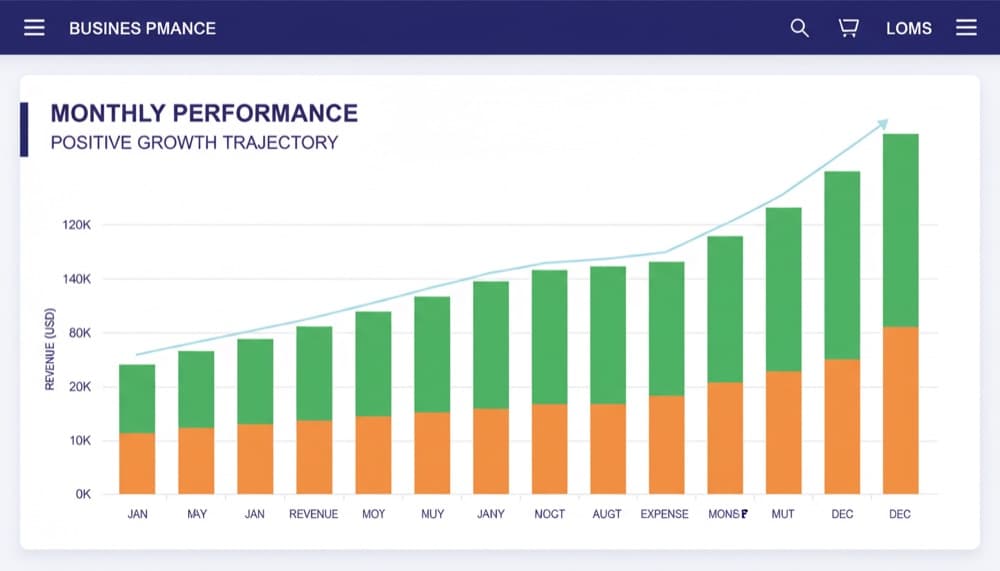
A P&L is most useful when compared: against the same period last year (trend analysis), against your budget (variance analysis), and against industry benchmarks. Ask: Is gross margin improving or declining? Which expense categories are growing faster than revenue? Is there a month where profit dropped unexpectedly - and why?
Operating leverage
If revenue grows by 20% but operating expenses grow by only 10%, your operating margin expands. This is operating leverage - the hallmark of a scalable business. If expenses grow at the same rate as revenue, you are not scaling efficiently.
Key Takeaway
Review your P&L monthly, not just at year-end. A monthly review takes 30 minutes and catches problems when they are still fixable.
Put this into practice with Note.now
Everything covered in this guide is built into Note.now. Try it free for 7 days.
Get started free