
VAT Explained for Small Business Owners
Value Added Tax (VAT) is one of the most misunderstood areas of business finance, yet getting it wrong is expensive. Penalties for late registration, incorrect filings, or charging the wrong rate add up quickly. This guide explains VAT from the ground up: when to register, how to charge it, how to reclaim it, and how to stay compliant.
What Is VAT and How Does It Work?
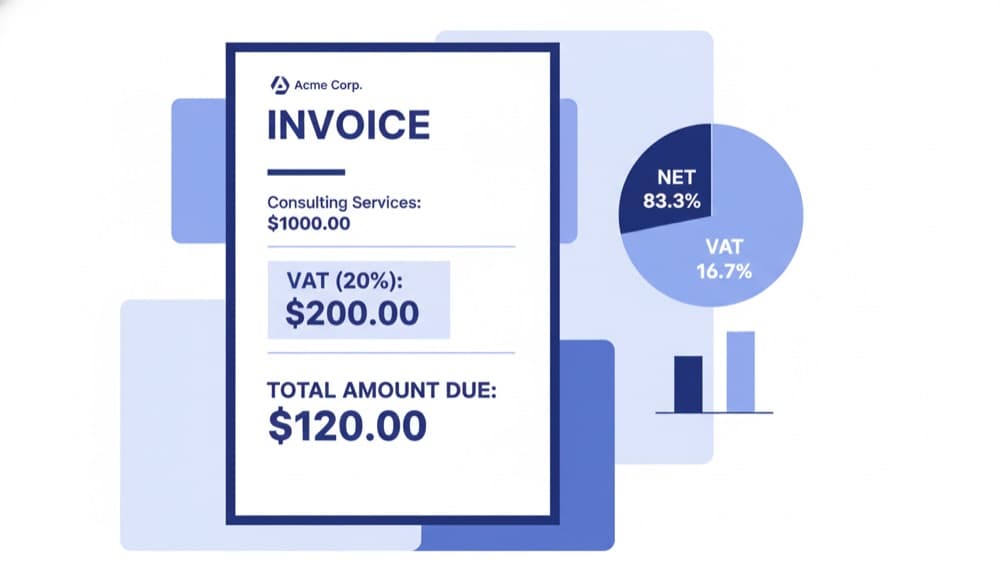
VAT is a consumption tax applied to most goods and services at each stage of the supply chain. As a VAT-registered business, you collect VAT from your customers on behalf of the government (output VAT) and reclaim VAT you have paid to your own suppliers (input VAT). The difference is what you pay to HMRC.
How VAT flows through the supply chain (UK, 20%)
Manufacturer sells to wholesaler: £100 + £20 VAT = £120
Manufacturer pays HMRC: £20

Wholesaler sells to retailer: £150 + £30 VAT = £180
Wholesaler reclaims £20, pays HMRC: £10

Retailer sells to consumer: £200 + £40 VAT = £240
Retailer reclaims £30, pays HMRC: £10

Total collected by HMRC: £40 (20% of final price)
Key Takeaway
VAT is neutral for VAT-registered businesses - you collect it for the government and reclaim what you pay. The real cost is only borne by the final consumer.
When Do You Need to Register for VAT?
In the UK, you must register when your taxable turnover in any rolling 12-month period exceeds £90,000 (as of April 2024). You can also voluntarily register below this threshold to reclaim input VAT on purchases - often beneficial if your customers are VAT-registered businesses.
Compulsory registration
Once you exceed £90,000 in any 12-month window, you have 30 days to notify HMRC. You must charge VAT from the date you became liable. Penalties for late registration start at 10% of VAT due in the late registration period.
Voluntary registration
Registering voluntarily lets you reclaim input VAT and appear more credible to business customers. The main downside is the admin burden - quarterly VAT returns and the requirement to add VAT to your prices.
VAT Rates: Standard, Reduced, and Zero
Not all goods and services carry the same VAT rate. Understanding which rate applies is essential for correct invoicing and reclaiming.
UK VAT rates
Standard rate (20%): Most goods and services. Reduced rate (5%): Domestic energy, children's car seats, some renovation work. Zero rate (0%): Most food, books, children's clothing, pharmaceuticals. Exempt: Financial services, insurance, health and education. Zero-rated and exempt are critically different - on zero-rated you can reclaim input VAT; on exempt you cannot.
Zero-rated vs exempt - the critical difference
Children's clothing (zero-rated):
• Charge 0% VAT on sales
• CAN reclaim 20% VAT on business purchases
• Net effect: beneficial

Insurance (exempt):
• Charge no VAT on sales
• CANNOT reclaim VAT on business purchases
• Net effect: you bear the VAT cost on all inputs
Filing VAT Returns
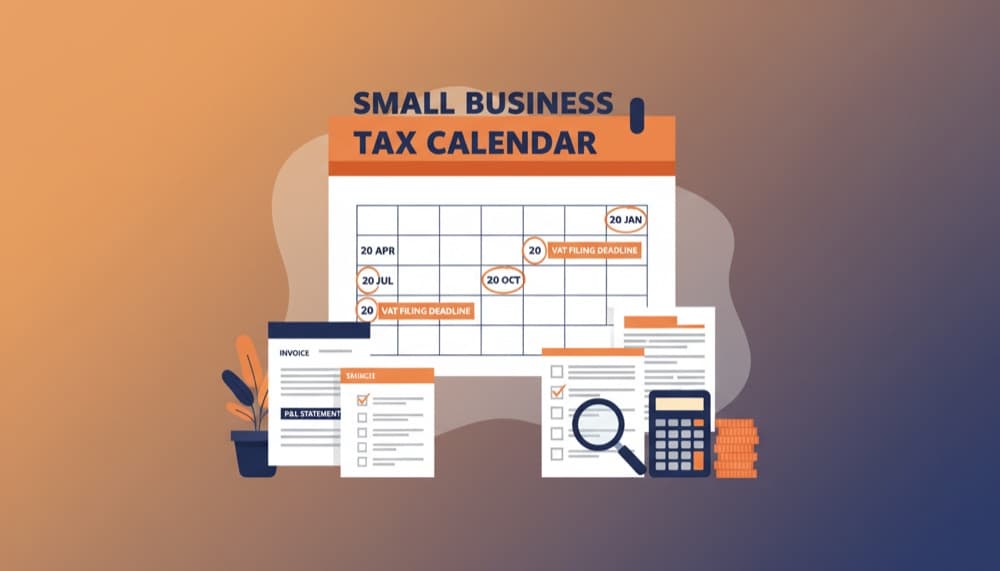
In the UK, VAT-registered businesses submit a VAT return to HMRC every three months. Under Making Tax Digital (MTD) for VAT, all VAT-registered businesses must use HMRC-approved software and submit returns digitally. Note.now is MTD-compliant and submits VAT returns directly from within the software.
Cash accounting vs standard VAT
Under standard VAT, you account for VAT when an invoice is raised. Under cash accounting (available to businesses below £1.35m turnover), you account for VAT only when cash is received or paid. Cash accounting is simpler and better for cash flow.
Key Takeaway
MTD penalties for non-compliant filing are up to £400 per quarter. Setting up compliant software before it becomes mandatory makes the transition seamless.
The Most Common VAT Mistakes
Frequent and costly VAT errors include: failing to register on time, applying the wrong rate, not issuing VAT invoices to VAT-registered customers, reclaiming input VAT on non-business expenses like client entertaining, reclaiming VAT on cars with private use, and not keeping adequate records. HMRC can raise assessments going back 4 years (20 years for deliberate errors).
Put this into practice with Note.now
Everything covered in this guide is built into Note.now. Try it free for 7 days.
Get started free